

Barcelona’s Port Olimpic
Enjoying everything on offer at the city’s modern marina
By Duncan Rhodes 
Construction of the Olympic marina in the early 90s helped transform Barcelona from port town into a cosmopolitan beach city that would compete with London, Paris and Rome as Europe’s hottest destination. We check out the best things to do in the iconic Port Olimpic, as well as which hotels you can check into.
As the name suggests, Barcelona’s Port Olimpic was built to coincide with the 1992 Olympic Games, and its appearance on the city landscape is perhaps the most notable of the building projects the sporting event left behind. What was once little more than a disused wasteland is now a prime piece of real estate on the coast, surrounded on either side by a stretch of urban beaches.
Today the Port Olimpic is one of the most attractive areas of the city to visit, full of bars, restaurants, leisure facilities and modern sculptures, and its allure is only set to grow as an ambitious refurbishment takes place to ready the marina for the Americas Cup in 2024.
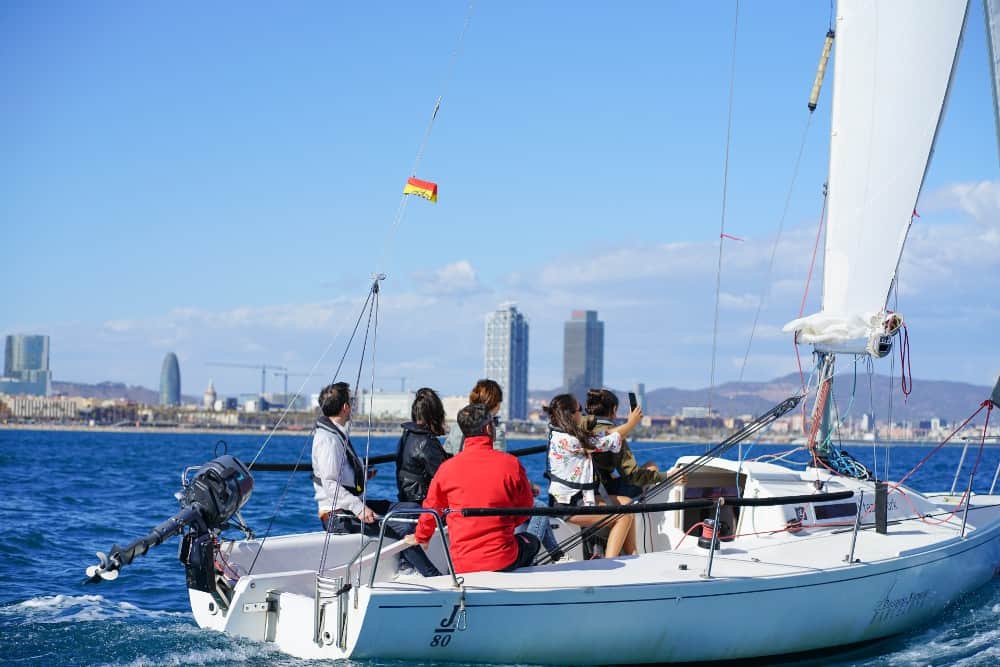
You too can set sail from Port Olimpic….
The core of the district is naturally the square-shaped marina, which juts out into the Mediterranean and shines with the paint of bright white sailing boats and yachts, either moored or setting out to sea as folks set off for an afternoon sail, or perhaps a cruise up the Catalan coast (if you want to do the same, check out our page on sailing activities!).
Landmarks
Two of the city’s most instantly-recognisable buildings reside at the port, in the forms of the Mapfre Tower and Arts Hotel – twin towers which cast their shadow over the beach below. These skyscrapers were, in fact, built as part of the Olympic Village to house athletes during the Games, but are now an office building and 5-star luxury hotel respectively. They also form the perfect landmark for any disorientated tourists, as they are visible from almost every point along the sands.
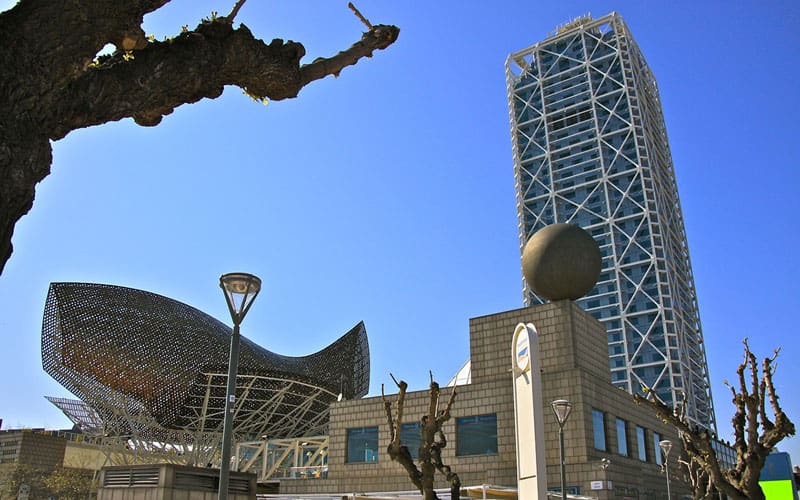
Frank Gehry’s golden fish glittering in the sun
Below the towers are a number of attractions worth checking out, including the Parc del Port Olimpic, Enric Miralles’ Torre de Gas Natural (impressive glass head offices of Barcelona’s gas company) and the Gran Casino, whilst the visitor is unlikely to miss the gleaming copper sculpture that has become the emblem of the port: known as the ‘El Peix d’Or’ or ‘The Golden Fish’, this futuristic landmark was designed by none other than Frank Gehry, the architect who designed the Guggenheim Museum in Bilbao and has a fetish for all things fishy (indeed the fish is his signature motif!).
The Beaches
Naturally most travellers calling by the Port Olimpic will be taking a keen interest in one of Barcelona’s greatest assets – its beaches! The famous Barceloneta beach stretches south from the twin towers (right down to the sail-shaped W-Hotel) and is the favourite stretch of sand for the city’s first-time visitors.
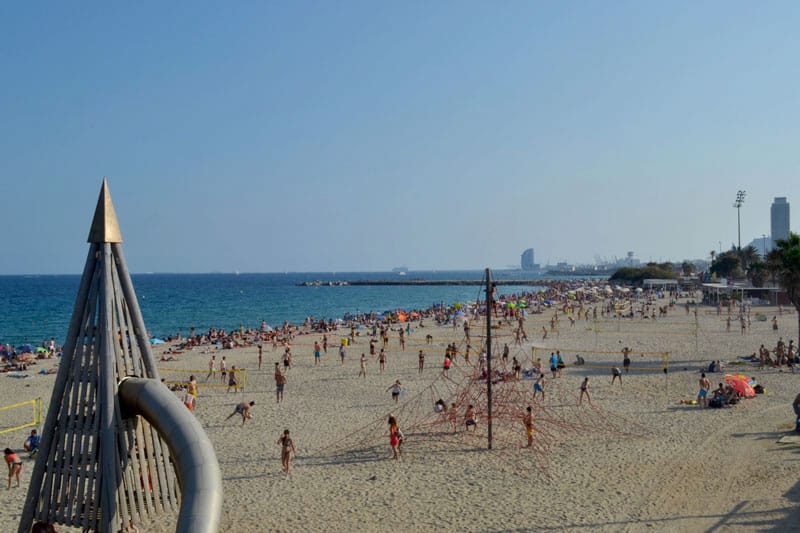
Looking over Marbella
Northwards, going up to Parc del Forum are the rest of Barcelona’s beaches, starting with Nova Icaria, then Bogatell and continuing via Mar Bella and Nova Mar Bella to Llevant (it’s on these sands where generally-speaking locals prefer to congregate).
Nightlife
At night, and especially during the hot summer months, Port Olimpic becomes one of Barcelona’s most popular nightlife districts thanks to a long stretch of upmarket nightclub-restaurants such as CDLC, Shoko and of course the legendary Opium Barcelona.
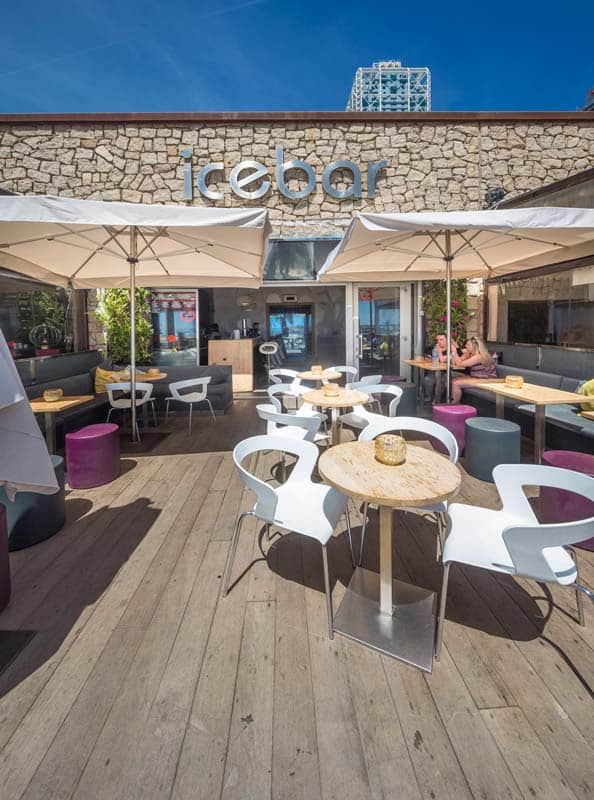
Cool cats in expensive beachwear and sunglasses stop by for evening cocktails first at the likes of Furia Cocktail Bar, a fantastic pre-party venue with DJs at the weekend, or on the airy terrace of Ice Bar. Meanwhile, smart couples head over to the Port for dinner, before dressed-up damsels and bronzed Adonises taxi their way to the strip later in the evening for dancing and general misbehaving.
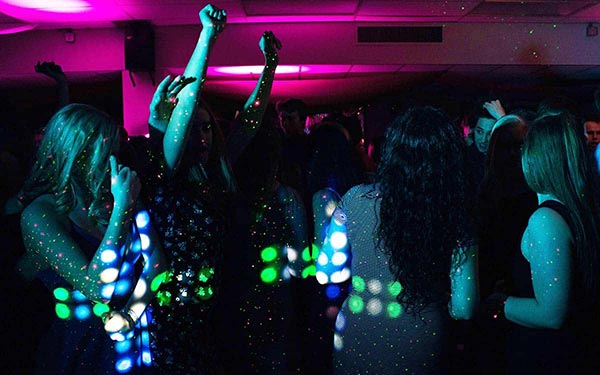
Take a VIP Nightlife Tour that ends at Opium
After the lounge clubs kick out at 3am, many head over to Pacha or Opium, both of which keep going until 6am. The latter is the most popular hotspot in town… and for those party animals who fancy taking a VIP nightlife tour that finishes in Opium keep reading!. Skinny dipping in the Med. afterwards is strictly optional.
5 Great Things To Do
This coastal hub has plenty of things to do beyond beaches and clubbing. Here are our recommendations.
1. Enjoy A Sailing Trip
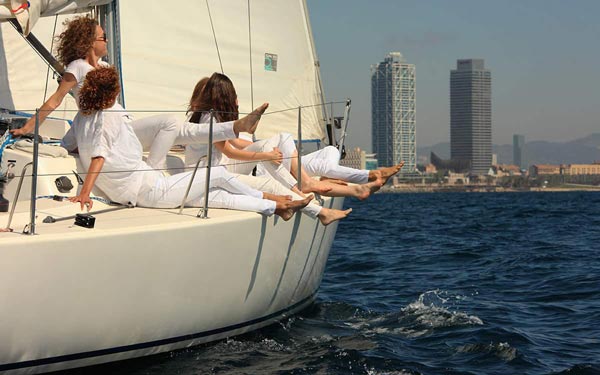 Most Barcelona boat tours leave from Port Olimpic, and for that true Mediterranean vibe we’d suggest a trip on a sailing yacht. Our sailing article details a number of options where you can book a space on a boat, or you can book a private sailing trip with skipper from as little as €250.
2. Take an Electric Bike Tour (or Rent One!)
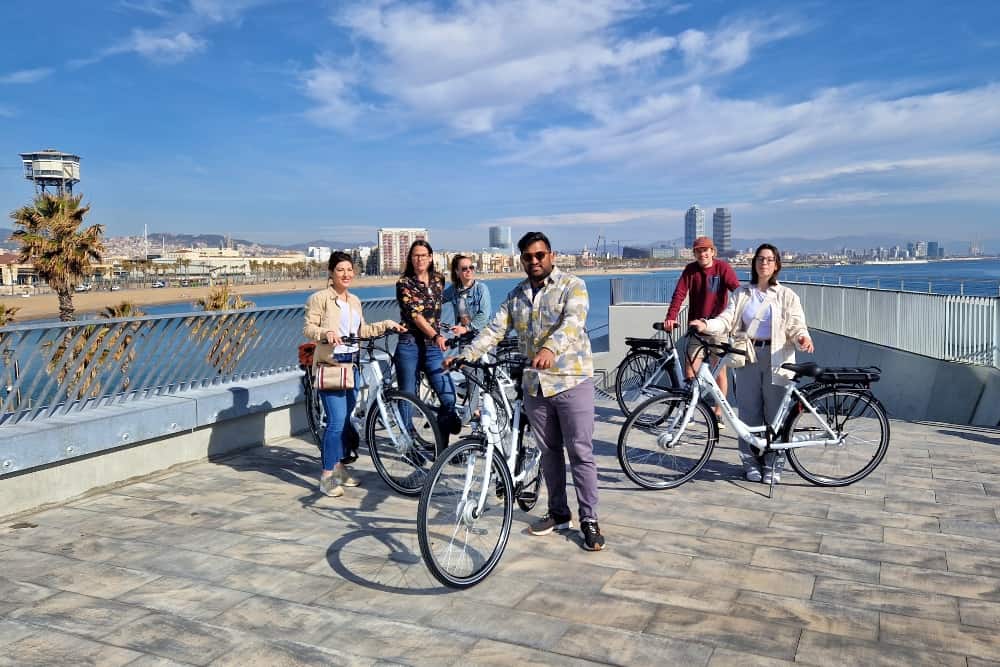 The refurbished Port Olimpic is more accessible than ever by bike, and in general the city continues to lay down bicycle lanes and make the Catalan capital two wheel friendly. Ocean Bikes Barcelona occupy almost the first space on the marina, and offer two fantastic tour itineraries – a morning Photo Highlights Tour for first time visitors and a relaxing afternoon Parks & Playas Tour for those looking for a chilled out ride. Prefer to do your own thing? You can also rent their chic Italian-designed e-bikes. Check out their website for more.
3. Chill Out at Ice Barcelona
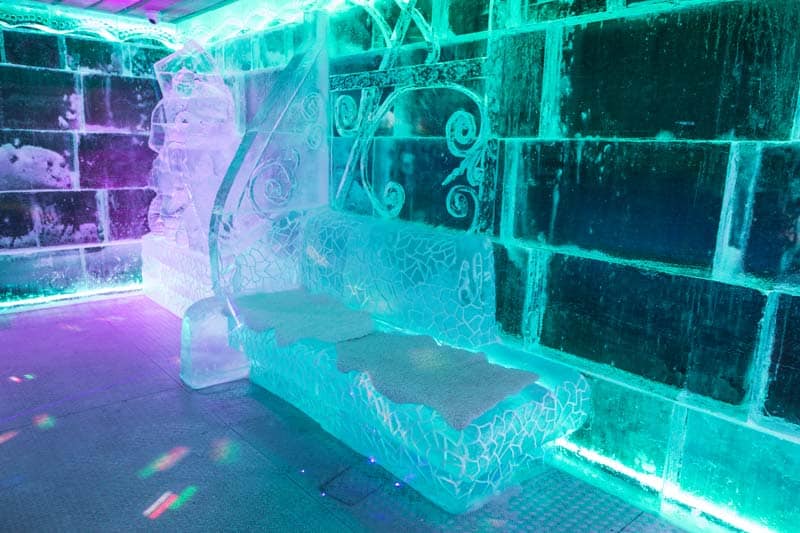 If you need to cool off at any point of your trip then look no further than the world’s only ice bar on the beach! Sure, you could just relax at Ice Barcelona‘s terrace with a cocktail, but why not step inside their subzero chamber to quaff a shot of vodka from a glass made out of frozen H2O? Frosty sculptures offer plenty of photographic potential for showing off on social media. The bar gets popular in summer, so best reserve your spot.
4. Explore By Segway
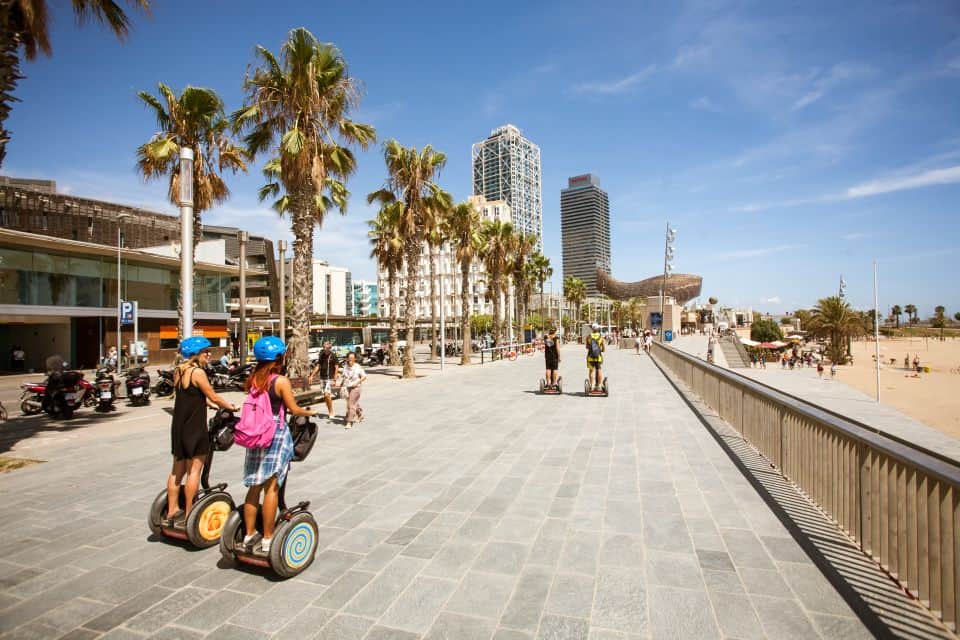 Starting in the Gothic Quarter, you can take a futuristic segway tour of the Port Olimpic and some of Barcelona’s surrounding highlights. These fun and funky machines are great to ride and perfect for shorter tour itineraries, such as this 2 hour tour available on Get Your Guide. You can explore more Segway tour options here.
5. Explore Marina Village
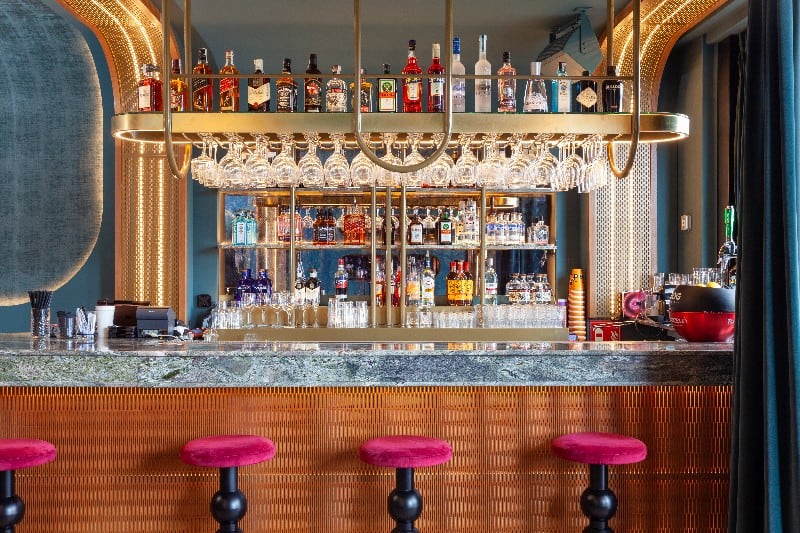 Just back from the beach, this modern ‘village’ of white steel girders is host to Barcelona’s Casino, and several other cool bars, restaurants and boutiques that sometimes hide from view. One such place is Furia Cocktail Bar, whose lush art deco interior comes as quite a surprise to anyone ambling past. A great place to stop by for a refreshing Summer Fling.
Port Olimpic Hotels & Accommodation
If you fancy bedding down by the beach, it’s hard to look past the Hotel Arts… provided you’ve got plenty of cash to splash.
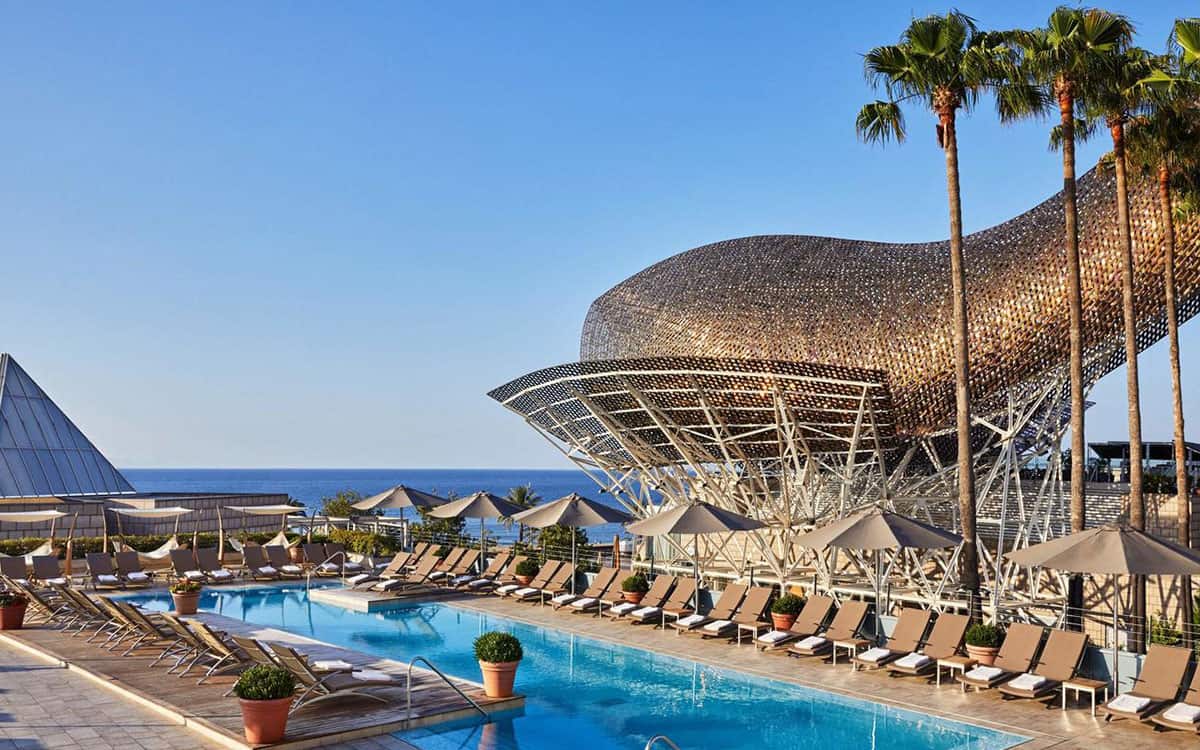
Otherwise you can get in contact with one of Barcelona’s many apartment rentals agencies, as several have pads for hire in this sought-after district. You might also try heading a bit further away to the Poblenou district where hotels abound, especially in the redeveloped area around Diagonal Mar.
More Info
For general info you can try the official Port Olimpic website, available in several languages.
Further Reading
To keep discovering Barcelona head to our districts guide to read more about some of the city’s other great neighbourhoods!
Meanwhile our article on what to do in Barcelona is one page resource for planning your entire Barcelona trip!
About the Author
 Duncan established Barcelona Life in 2009, whilst freelancing for the likes of Conde Nast, The Guardian, Easyjet Magazine, CNN Traveller and many more. From interviews with Ferran Adria to revealing the secrets of the city’s poetry brothels, he knows the city inside out… and shares all his best tips right here.